
A conversation with Silvia Makita
From the moment you step into Silvia Makita’s Milanese home studio, you cannot help but feel awash in calm. Tucked away beyond two interconnected courtyards and behind a simple metal gate, the contrast between the chaos of the city streets and the tranquillity of her space couldn’t be greater. Inside, light streams in from large rooftop windows while birdsong floats through from the inner yard.
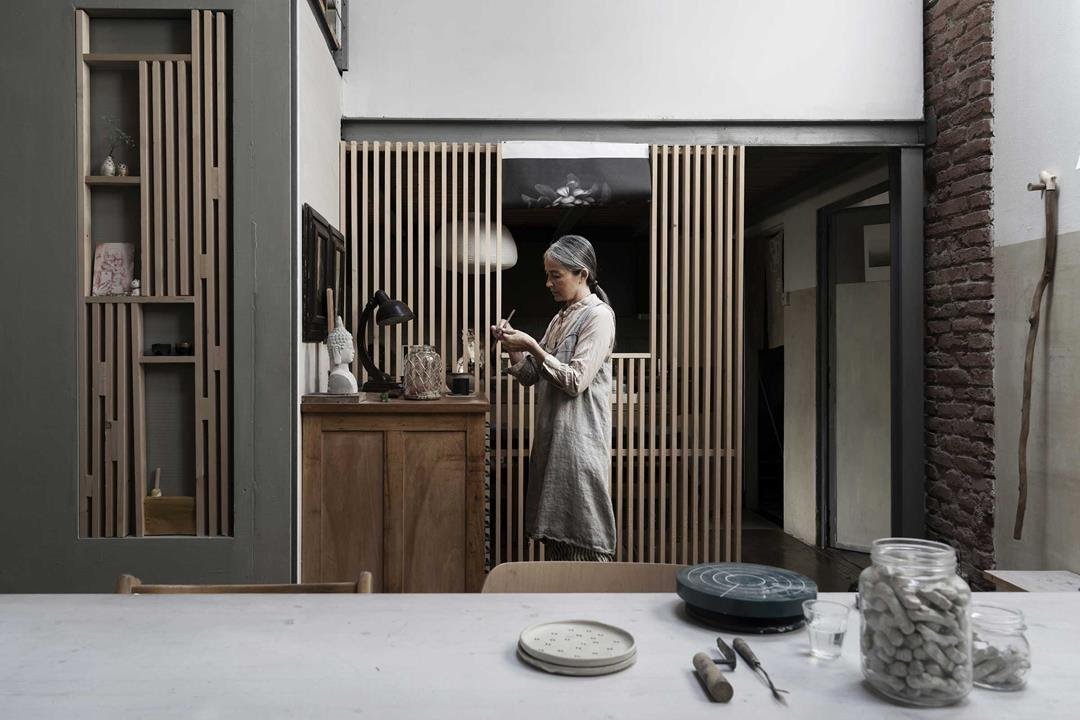
Set within an industrial loft, Makita’s home studio speaks of her distinct life and design ethos that sees the Asian and the European effortlessly fused together into a unique energy. Alongside her husband and photographer Andrea Martiradonna, Makita has intentionally created a living and studio space that is as fluid and minimal as her art.
“When we first moved here over twenty-five years ago, it was just a simple open-plan studio where Andrea and I would create our work in. When our first child arrived shortly afterwards, we decided to divide the loft into separate living and working quarters, and over the years, we have transformed the space organically to meet our unfolding life.”
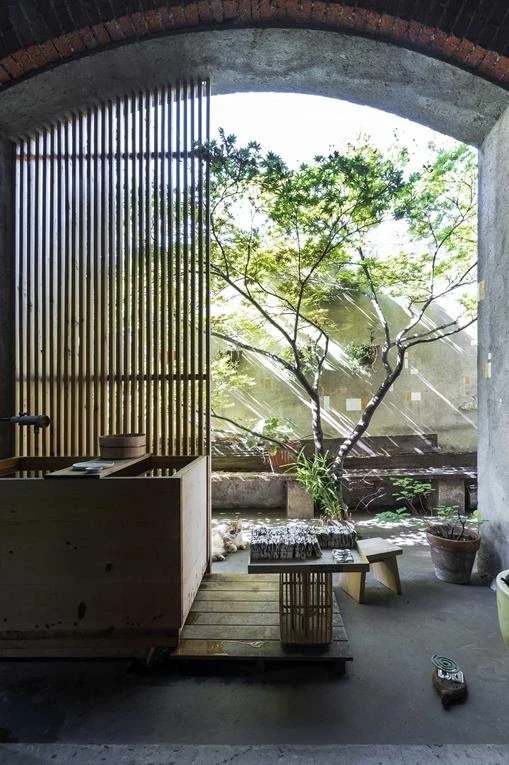
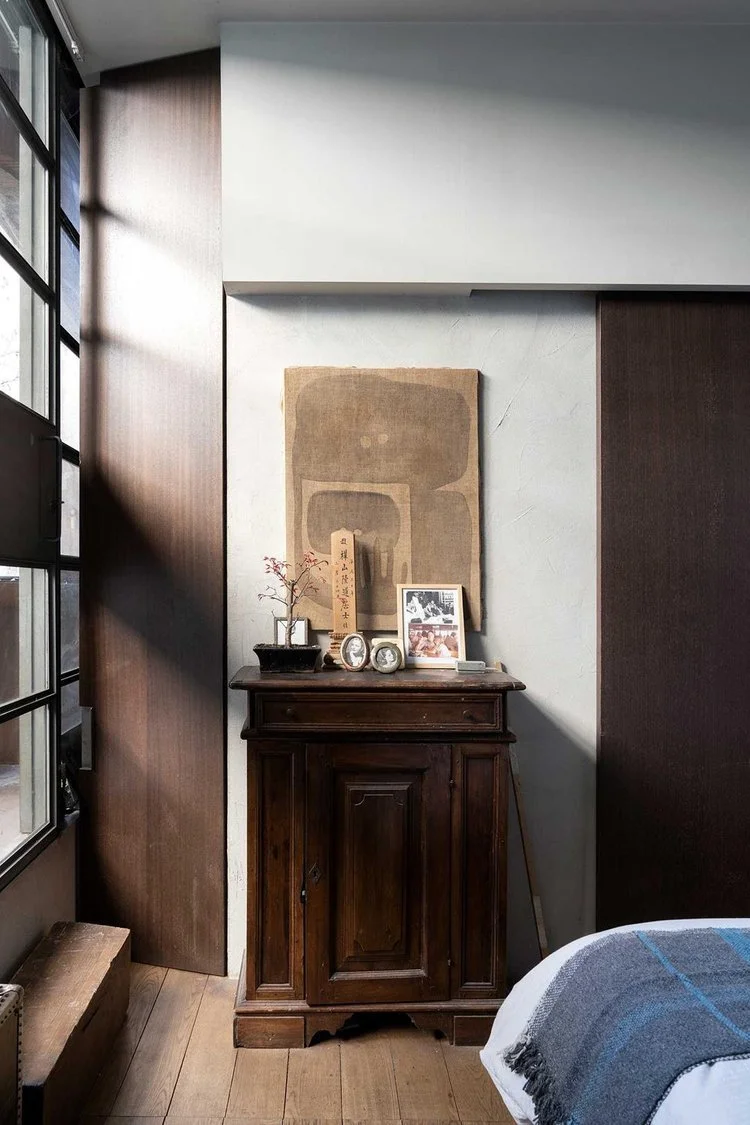
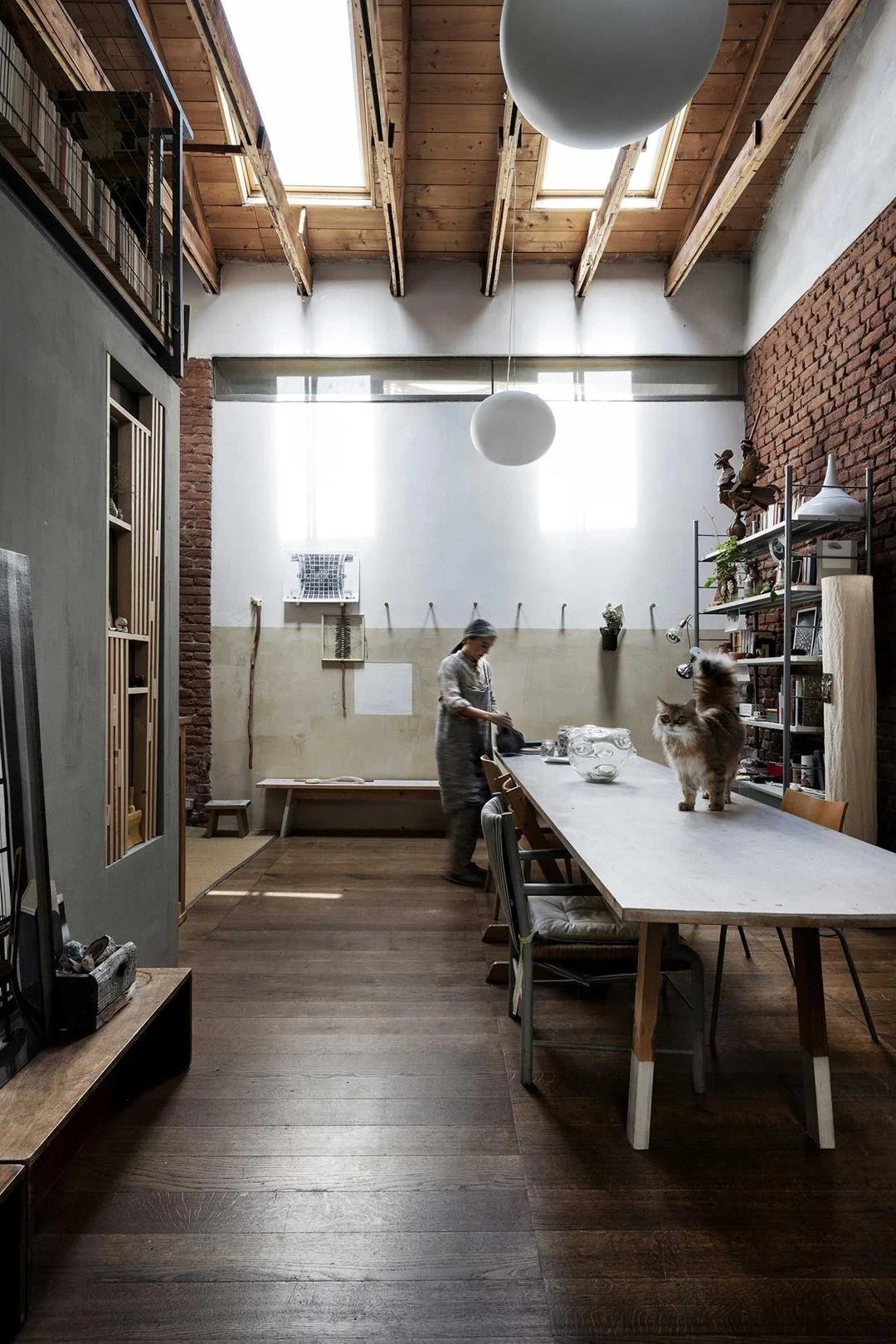
Characterised by soaring ceilings and an earthy palette, raw materials as wood, cement and bare bricks are prevalent throughout. From the main entrance where a long wood table – handcrafted by Makita and Martiradonna – greets visitors, the home studio opens up into the first of two quarters that are separated by cement walls washed with plaster hand-tinted by Makita.
“To me, home is a reflection of our inner worlds, almost like a sanctuary that shelters us from all that occurs outside our front door,” says Makita. “In many ways, I have been greatly inspired by the artisans and tradesmen that I would chance upon while exploring the hectic streets of my native Japan. Amidst the noise and busyness of life, they create a miniscule oasis of peace and order in which they work in, oblivious to all else outside.”
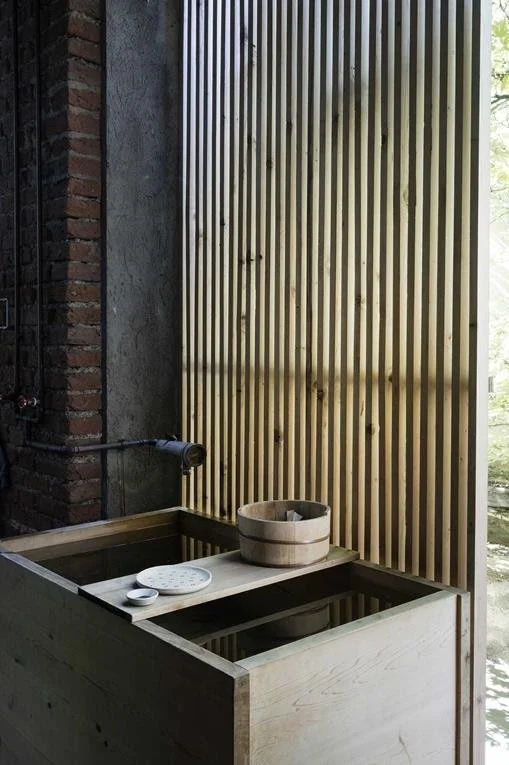
The décor is pared-down and sparse, with the sleeping, living and working spaces remaining interconnected while three different entrances separate the home studio. The creative works of Makita and Martiradonna are purposefully placed alongside decorative elements such as an outdoor hinokiburo and a Le Corbusier-designed LC4 chaise longue in the living area, reflecting the Japanese-Romanian heritage of Makita and the Italian roots of Martiradonna.
“To me, art is a rite, a prayer. It is the expression of our internal essence and holds an intention. Many of my works are developed over extended stretches of time and, just like this house, take years to develop and complete.”
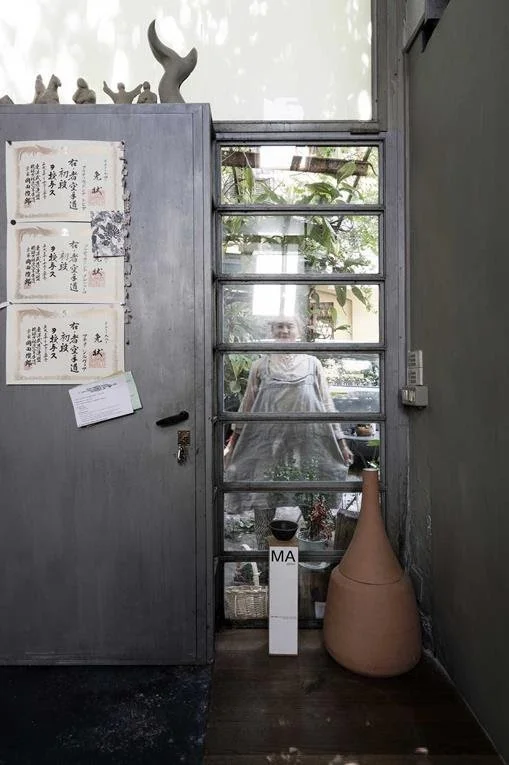
With a background in architecture, Makita’s multifaceted creativity is expressed across diverse forms and materials, from her ceramics to her hand-painted calligraphy and prints created with hand-engraved brass slates. Each, like her home studio, is a quiet study of the self, bringing to light the beauty of the inner sanctuary that lies within us all.
Images by Andrea Martiradonna and Jasmina Martiradonna.
An edited version of this article was published in The Dispatch #97 Salone 2022 edition by Design Anthology Asia.